Immunotherapy
Proteins, cell lines and assay kits for your immunology research
Immunotherapy is defined as the treatment of disease by inducing, enhancing, or suppressing an immune response. Given its diverse function and the fact that the immune system plays a role in virtually all human diseases, immunotherapy has become an important approach for the treatment of numerous diseases.
This often involves targeting immunoreceptors with small molecule inhibitors/activators or immune system components including antibodies or antibody fragments (Fab). Immunotherapies have shown efficacy in the treatment of cancer, autoimmune diseases, inflammatory diseases, and more, and are an exciting avenue of immunology research.
Our Products
AMSBIO offers many purified, soluble immunoreceptors involved in key immunosignaling pathways. Additionally, we offer a number of assay kits that can be used to screen for inhibitors of protein-protein interaction, as well as neutralizing antibodies to serve as positive controls for inhibition.
| Name | Packsize | Order |
|---|
| Name | Packsize | Order |
|---|
| Name | Packsize | Order |
|---|
| Name | Packsize | Order |
|---|
| Name | Packsize | Order |
|---|
The Immune System
The immune system is a system of cells and organs whose function is to defend an organism from foreign pathogens. With the ability to mount a response against virtually any foreign material and return to a quiescent state following neutralization of the threat, this fascinating organ system displays remarkable specificity and plasticity. To achieve this, there is a multifaceted balancing act between the many activators and suppressors that maintains homeostasis of perhaps the body’s most complex organ system.
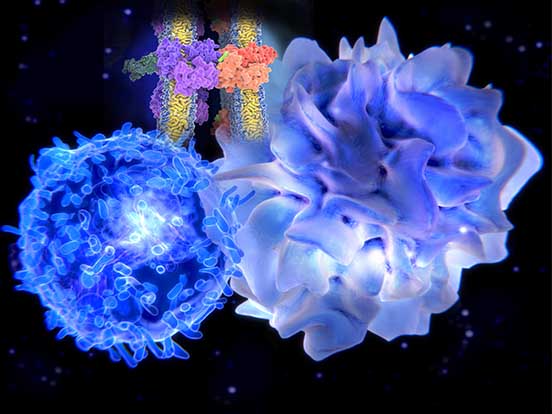
Activation of the immune system involves a number of checkpoints in order to ensure proper activation. For instance, T cell activation requires binding of the T cell receptor to the MHC antigen, yet this interaction alone is not sufficient for producing a T cell response. Full T cell activation and inactivation requires the coordination of a multitude of co-stimulatory and inhibitory signals. For example, T cell activation can result from the combination of MHC:TCR and B7-1:CD28 interaction. In contrast, B7-1 binding to CTLA4 results in an inhibitory signal that prevents activation.
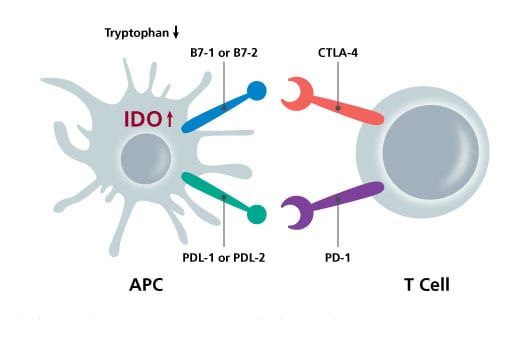
Given its diverse function and the fact that the immune system plays a role in virtually all human diseases, immunotherapy has become an important approach for the treatment of numerous diseases. Immunotherapy is defined as the treatment of disease by inducing, enhancing, or suppressing an immune response. This often involves targeting immunoreceptors, such as those discussed above, with small molecule inhibitors/activators or immune system components, including antibodies or antibody fragments (Fab). Immunotherapies have shown efficacy in the treatment of cancer, autoimmune diseases, inflammatory diseases, and more.
PD-1 Receptor
The understanding of the checkpoint signaling pathway involving the programmed death 1 (PD-1) receptor and its ligands (PD-L1/2) in tumor-induced immune suppression has been a critical advancement in immunotherapeutic drug development. Tumors that express PD-L1 can often be aggressive and carry a poor prognosis. The anti-PD-1 and anti-PD-L1 agents have a good safety profile and have resulted in durable responses in a variety of cancers, including melanoma, kidney cancer, and lung cancer. The PD-1/PD-L1 pathway in cancer is implicated in tumors escaping immune destruction and is a promising therapeutic target. The development of anti-PD-1 and anti-PD-L1 agents marks a new era in the treatment of cancer with immunotherapies.
References
The blockade of immune checkpoints in cancer immunotherapy
Pardoll, D.M., Nat. Rev. Cancer. 2012; 12: 252-264.
Cancer immunotherapy – revisited
Lesterhuis, W.J., et al., Nat. Rev. Drug. Disc. 2011; 10: 591-600.