CAR-T Cell Research
Cells, recombinant proteins, and assays for CAR-T research
Personalized treatment for cancer reached a new milestone with the FDA approval of CAR-T cells for treatment of leukemia and lymphoma. There is now rapid growth in research on the therapeutic uses of CAR-T cells.
At AMSBIO, we strive to provide tools at the cutting edge of cancer research. We produce a growing list of experimental cell lines, recombinant proteins and screening services to advance the search for new CAR-T cell therapies.
How does CAR-T cell therapy work?
A therapeutic CAR (chimeric antigen receptor) is a transmembrane protein designed with an extracellular domain based on an antibody single-chain variable fragment (scFv) and intracellular signaling domains derived from the TCR g chain, along with other costimulatory receptors. The scFv provides a specific binding domain that recognizes target proteins on cancer cells. A patient’s own T cells are isolated and activated, then transfected with a gene expressing the CAR. This reprograms the T cells to identify and attack tumor cells expressing the target protein, creating personalized immune cells designed to specifically target the patient’s cancer.
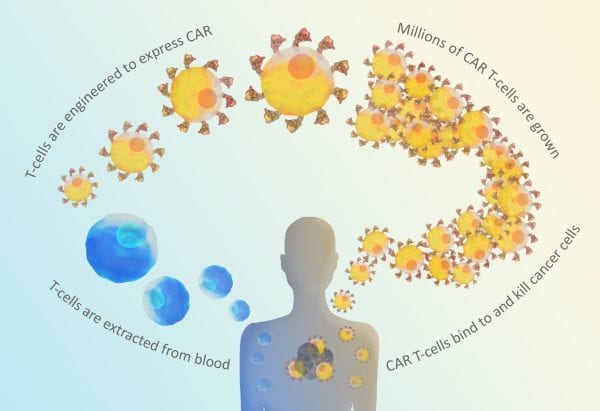
The first FDA approved treatments were CAR-T cells directed against the B cell protein CD19. Success with CD19 has inspired new research identifying additional targets for several blood cancers and even solid tumors. For example, early clinical trials using CAR-T treatment suggest BCMA and CD22 are promising targets for multiple myeloma and acute lymphoblastic leukemia. CD19-targeting CAR-T cells are also in development as co-therapies with therapeutic antibodies targeting the PD-1:PD-L1 and CD28:CTLA4 pathways. The aim of these early studies is to determine if CAR-T cells can overcome the challenges of adaptive resistance to immune checkpoint therapies.
We offer knockout cell lines for TCR, B2M, and CIITA, enabling the modeling of universal CAR-T cells. We also provide cell lines expressing common CAR targets like BCMA, CD19, CD20, and more, many of which include the luciferase reporter for simple monitoring. We also offer ready-to-use CAR-expressing cells for assay design/optimization and as positive controls in co-culture assays, as well as eGFP and Luciferase-expressing NK-92 cells for CAR-NK research.
Cell Lines
| Name | Packsize | Order |
|---|
Recombinant proteins can be used for a variety of purposes for CAR-T cell research. We provide biotin and PE-labeled versions of many of the target antigens for CARs, such as BCMA, CD19, CD22, CD38, CD123, and ROR1. These PE-labeled proteins can bind to CAR-T cells and be detected by flow cytometry, in order to verify CAR-T cell antigen recognition.
Assays & Proteins
| Name | Packsize | Order |
|---|
CAR-T Cells
| Name | Packsize | Order |
|---|
Cell Media & Activation Beads
| Name | Packsize | Order |
|---|
Non-Transduced Primary Cells
| Name | Packsize | Order |
|---|
PBMCs (Peripheral Blood Mononuclear Cells) play a crucial role in CAR-T research. These cells, including T cells and other immune cells, are isolated from the patient's blood and can be engineered to express CAR receptors specific to cancer antigens. PBMCs serve as the starting material for CAR-T cell production, allowing researchers to study their efficacy, functionality, and potential for targeted cancer therapy.
PBMCs
| Name | Packsize | Order |
|---|
Antibodies
| Name | Packsize | Order |
|---|
Lentiviruses are well-suited for introducing CAR genes into primary cells, and our replication-incompetent lentiviruses are particularly advantageous due to their VSV-G pseudotyping. This enhances their safety, stability, and versatility across various cell types, especially T cells in culture. Our high-titer CAR lentivirus products allow for efficient transduction and sustained expression in both resting and actively dividing cells over extended periods of time.
Lentiviruses
| Name | Packsize | Order |
|---|