Oxidative Stress: Antioxidants and Free Radicals
Antibodies and assays to support your research
The disturbance in balance between highly reactive oxygen species (free radicals) production and antioxidant defense against these radicals is defined as oxidative stress. It is known to play important roles in disease development, immune defence and the ageing process.
AMSBIO is offering an extensive range of antibodies and assays for oxidative modification, redox modulators and inflammatory biomarkers.
What is Oxidative Stress?
Reactive Oxygen Species
Many natural biological processes in our bodies, such as metabolism, result in oxygen-containing molecules splitting into fragments with unpaired electrons. The resultant molecules are known as reactive oxygen species (ROS), or free radicals. The uneven number of electrons allows free radicals to easily react to other molecules; they scavenge the body seeking other electrons until they can become a pair.
The natural production of free radicals play a role in several physiological processes such as protein phosphorylation, activation of transcriptional factors, immunity etc., but need to be kept at a low level.
Antioxidants
Normally, ROS is balanced by a variety of antioxidant enzymes in the body, such as superoxide dismutase, catalase, and glutathione peroxidase. These act as the body’s defense system to keep free radicals in check and convert them into less harmful molecules. Antioxidants can donate an electron to a free radical without making themselves unstable. This causes free radicals to stabilise and prevent them from reacting with cellular building blocks and damaging cells.
However, ROS can also be generated as a byproduct of environmental stressors (i.e. UV, ionizing radiation, pollutants & heavy metals), xenobiotics, diet & lifestyle, and inflammation. Oxidative stress results when these environmental stressors contribute greatly to an increase in free radical production in the body and overwhelm the natural antioxidant defense system, leading to a situation where ROS builds up faster than the body can get rid of it.

The effect of Oxidative Stress on the body
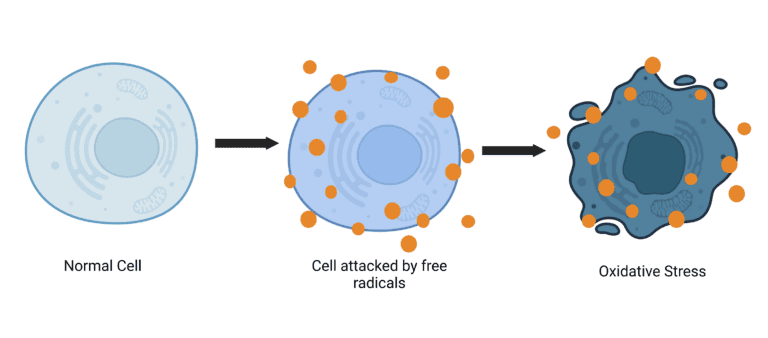
When there are more free radicals present than can be kept in balance by antioxidants, the free radicals can react with and damage building blocks such as lipids, DNA and proteins in your body. This damage can lead to a vast number of diseases over time which include:
- Cancer
- Diabetes
- Atherosclerosis
- Inflammatory conditions
- Heart disease
- Neurodegenerative diseases, such as Alzheimer's and Parkinson's
- Also contributes to aging (which has been defined as a gradual accumulation of free-radical damage, according to Christopher Wanjek, the Bad Medicine columnist for Live Science)
Amsbio is offering an extensive range of antibodies and assays for oxidative modification, redox modulators and inflammatory biomarkers as follows: