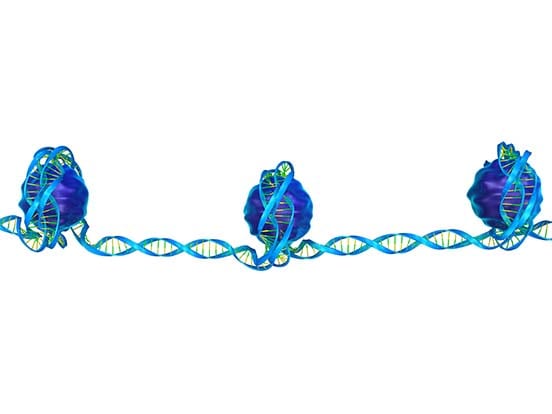
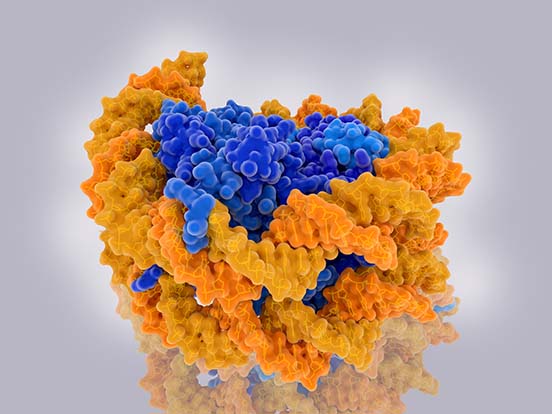
Acetyltransferases are enzymes that transfer an acetyl group from acetyl CoA to lysine amino acids. In the case of histone acetyltransferases (HATs), these lysine residues reside on histone tails. Generally, addition of acetyl groups to histone tails results in gene activation by inducing a euchromatin conformation and recruiting bromodomain-containing transcription factors for genes in close proximity to the acetylated histone. In a reaction mediated by deacetylase enzymes, such as histone deacetylases (HDACs) and sirtuins, the modification can be removed, thereby allowing for controlled, dynamic regulation of gene expression. Deacetylases, as the name implies, are enzymes that remove acetyl groups from protein substrates. The most well studied deacetylases are histone deacetylases (HDACs). HDACs oppose the effects of histone acetyltransferases (HATs), restoring the positive charge of the histone tail lysine residue. Removal of the acetyl group results in a more tightly compacted, heterochromatin conformation, thereby negatively regulating gene expression.